How Heavy Rain Can Expose Roof Leaks
Heavy rain often reveals small roof problems before they become major repairs.

A few simple checks can help spot flat roof weaknesses before heavy rain and wind arrive.
Flat roofs need particular attention before bad weather because water moves more slowly across them than it does on pitched roofs. Small defects around edges, outlets and upstands can become obvious during prolonged rain.
Useful checks include looking for ponding water, blocked outlets, lifted edges, cracked felt, damaged trims, loose flashing and signs that previous repairs are failing. These checks should be done safely and without walking on fragile areas.
Inside the building, stains, bubbling paint, damp smells and soft ceiling patches can point to water getting through. These signs should be investigated early because moisture can spread across deck boards or insulation before it becomes visible below.
A well-maintained flat roof can perform reliably, but it depends on drainage and detailing. Before storms arrive, clearing outlets and dealing with small defects can make a real difference.
If you are planning similar work, see our specialist roofing services or contact The Specialist Roofers for a free quote.
Future roofing is likely to focus on durability, energy performance, lower maintenance and better water management.
Roofing is changing because buildings are being asked to do more. A roof is no longer just a waterproof covering; it can help manage heat, collect solar energy, slow rainwater runoff and improve the life of the building below.
Future materials are likely to focus on longer service life and easier maintenance. Better membranes, improved coatings and more precise installation systems can reduce weak points around edges, outlets and penetrations.
Energy will also shape roofing. Solar panels, integrated photovoltaic tiles and reflective roof surfaces all change how a roof performs in different seasons. The best option depends on the building, pitch, structure and how the roof is used.
Even with new materials, the fundamentals remain the same. A roof still needs good preparation, correct detailing, sensible drainage and regular checks. Technology helps, but workmanship still decides how well a roof lasts.
If you are planning similar work, see our specialist roofing services or contact The Specialist Roofers for a free quote.
Lead has been used on British roofs for centuries because it is durable, workable and well suited to weathering details.
Lead roofing has a long history in Britain. Churches, manor houses, public buildings and older town properties often used lead because it could be shaped around complex details while standing up to wind and rain.
Its strength is flexibility. Lead can be formed around chimneys, valleys, dormers and abutments where more rigid materials struggle. That is why lead flashing remains common today, even on roofs built mostly from tile, slate, felt, GRP or modern metal systems.
Good leadwork depends on correct sizing, fixings, laps and allowance for thermal movement. When lead is fitted in sections that are too large, or fixed too tightly, expansion and contraction can cause splits over time.
Modern roofing still uses lead because the basic problem has not changed: roofs need reliable weathering at the awkward junctions. Traditional materials survive when they continue to solve practical problems well.
If you are planning similar work, see our specialist roofing services or contact The Specialist Roofers for a free quote.
Summer storms can expose blocked gutters, loose details and small repairs that were easy to miss in dry weather.
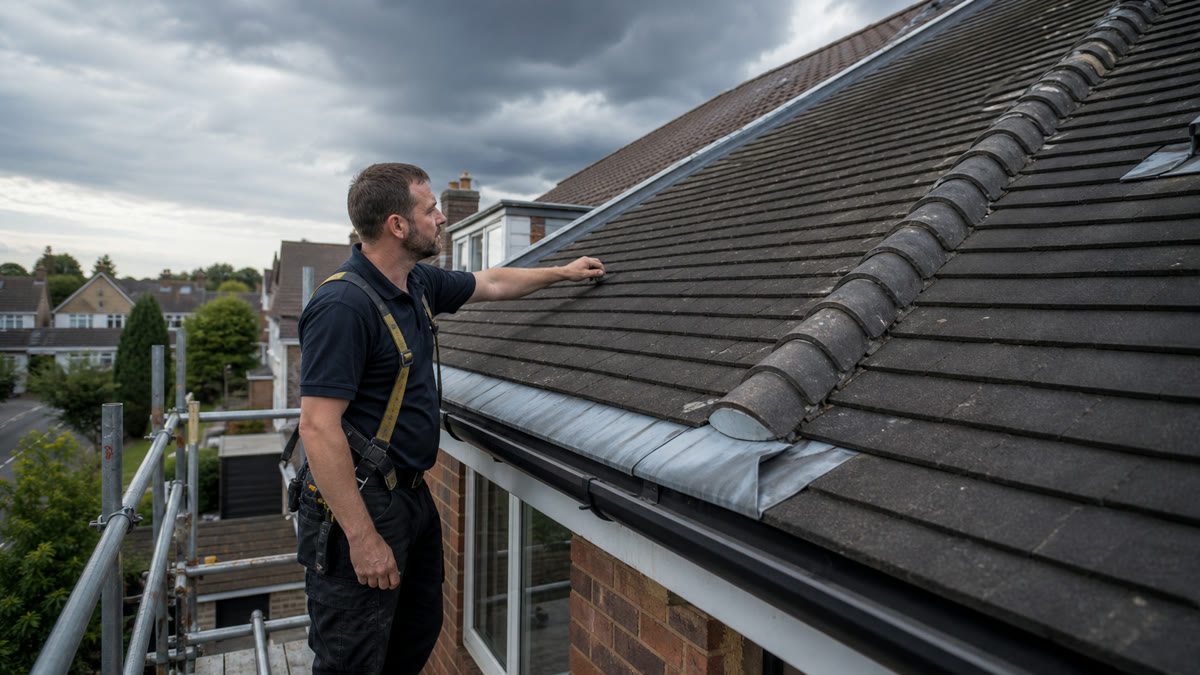
Summer can make a roof look trouble-free until a sudden storm arrives. Heavy rain and gusty wind can expose loose trims, blocked gutters, tired flashing or flat roof outlets that have been collecting debris.
Useful checks include gutters, valleys, roof edges, leadwork, visible cracks, slipped tiles and any damp marks inside loft spaces or top-floor rooms.
The aim is not to disturb sound roofing. It is to spot the small details that could let water in when weather changes quickly.
A short maintenance check before stormy weather can prevent avoidable damage and help plan repairs before they become urgent.
If you are planning similar work, see our emergency roof repairs or contact The Specialist Roofers for a free quote.
Chimney flashing repairs need careful leadwork because water can track behind small gaps.
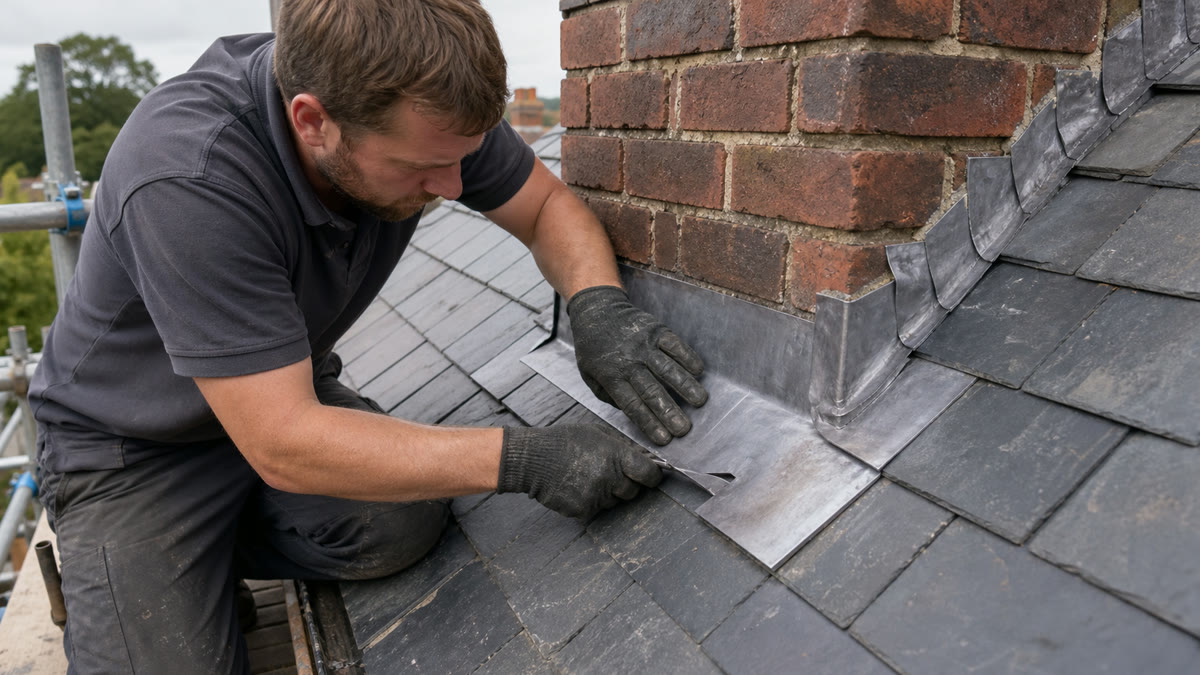
Chimneys are exposed roof details. Rain, wind and movement all meet at the point where the chimney stack passes through the roof covering.
Lead flashing helps weather that junction, but splits, loose pointing, short laps or poor previous repairs can let water track behind the detail. The leak may then show inside some distance from the stack.
A good chimney flashing repair starts with checking the lead, masonry, soakers, back gutter and surrounding tiles or slates. The visible gap is not always the only fault.
Neat leadwork and sound pointing protect the awkward part of the roof where small defects can quickly become internal damp.
If you are planning similar work, see our roof repairs and maintenance or contact The Specialist Roofers for a free quote.
Green roofs can protect a building well, but drainage, edges and waterproofing details still need attention.
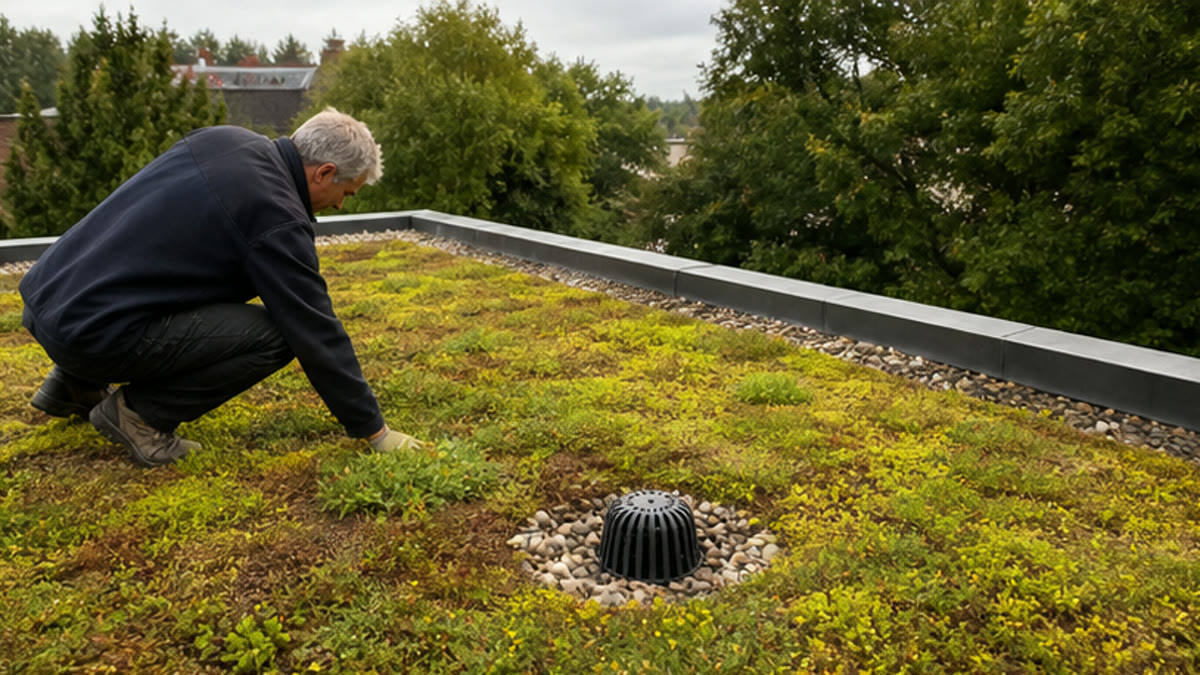
A green roof can help manage rainwater, improve insulation and make better use of a flat roof area. It still needs maintenance, because the waterproofing below has to keep doing the hard work.
The main checks are drainage, outlets, plant growth, edge details and signs that material has moved where it should not. Water must still have a clear path away from the roof.
Maintenance should be planned carefully so the roof covering is not damaged while the planted area is being checked. Safe access and a clear understanding of the roof build-up both matter.
When green roofs are looked after properly, they can be a practical roofing system rather than just a visual feature.
If you are planning similar work, see our green roofing or contact The Specialist Roofers for a free quote.
GRP fibreglass roof repairs depend heavily on dry, clean preparation before resin or topcoat work.
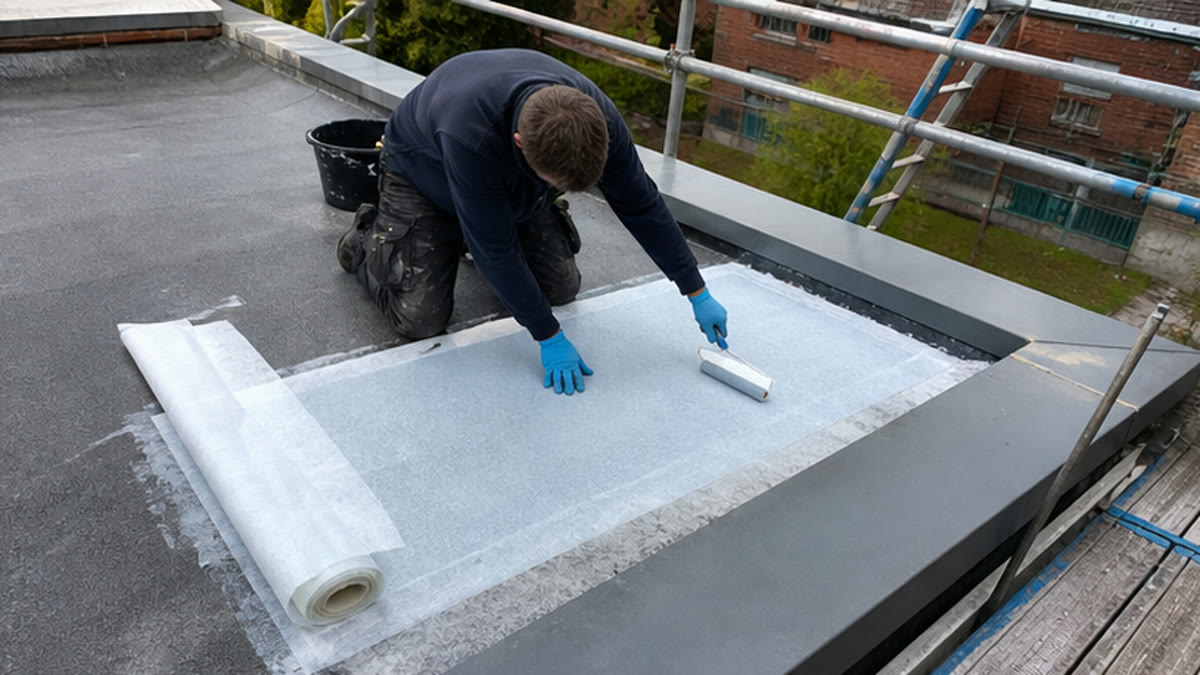
GRP fibreglass roofing can be very durable, but repairs need clean preparation. Resin and topcoat work will only perform well if the damaged area is dry, keyed and ready for the new material.
Common problems include cracks, impact damage, tired trims, failed joints and areas where movement has stressed the surface. Each fault needs checking before deciding on a local repair or a larger section of work.
Preparation often matters more than the visible finish. Dirt, damp or loose material can stop a repair from bonding properly, even if it looks neat on the day.
A reliable GRP repair should leave the roof watertight, tidy and correctly detailed around edges, outlets and any points where water can sit.
If you are planning similar work, see our roof repairs and maintenance or contact The Specialist Roofers for a free quote.
Splits in felt roofing often point to movement, age, trapped moisture or weak detailing.
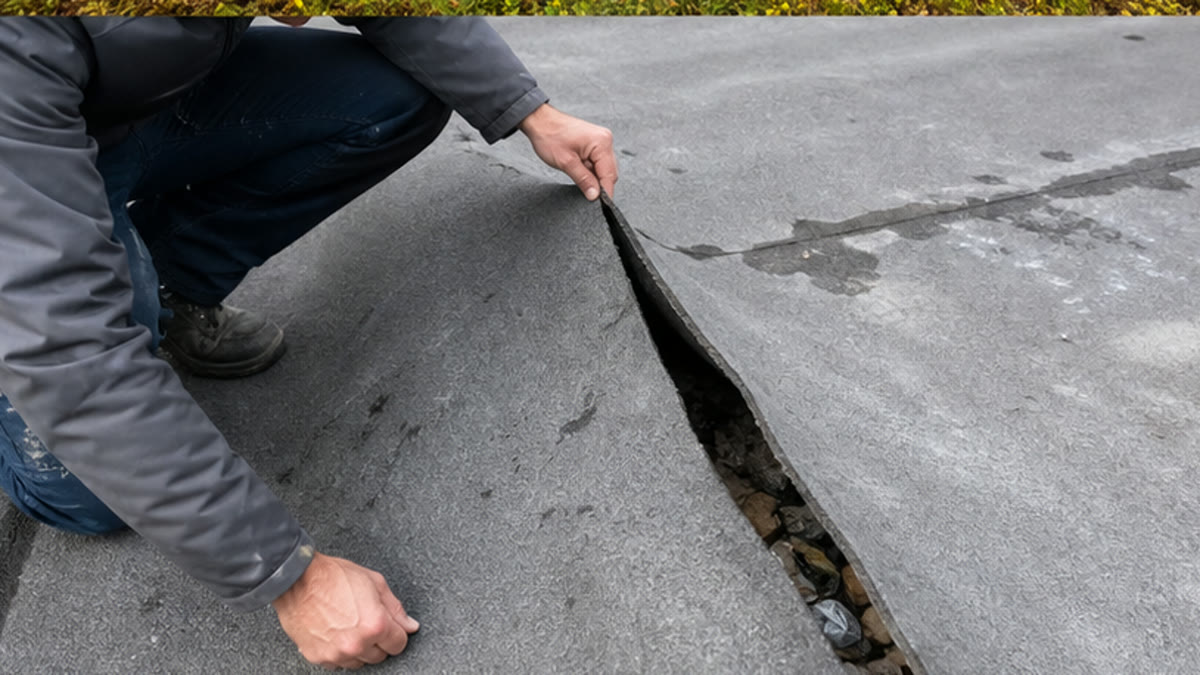
A split in a felt roof should not be ignored, even when it looks narrow. Water only needs a small opening to reach the deck, insulation or ceiling below.
Splits can come from age, movement, poor previous repairs, trapped moisture or stress around edges and upstands. The surrounding detail matters as much as the visible tear.
A proper repair starts with checking whether the felt is locally damaged or whether the wider covering is reaching the end of its service life. Patching the symptom without reading the roof can lead to repeated call-outs.
Good felt work depends on preparation, sound laps, tidy edges and reliable weathering where the roof meets walls, trims and outlets.
If you are planning similar work, see our felt roofing or contact The Specialist Roofers for a free quote.
Flat roof outlets need to stay clear because slow drainage can expose weak edges and joints.

Flat roof drainage depends on small details doing their job. Outlets, gutters and edge trims need to move water away before it sits against laps, upstands or roof edges for too long.
Blocked outlets are a common cause of trouble after heavy rain. Leaves, moss, grit and building debris can slow the flow until water ponds around the lowest part of the roof.
Warning signs include standing water, staining below the edge, damp smells inside, bubbling finishes or water running where it should not. These clues are worth checking before a small blockage becomes a leak.
A practical maintenance visit usually focuses on safe access, clearing the outlet, checking the surrounding roof covering and making sure water has a clean route away from the building.
If you are planning similar work, see our specialist roofing services or contact The Specialist Roofers for a free quote.